Narendra Modi Completes 25 Years in Government, From Gujarat Chief Minister to Prime Minister
New Delhi: Prime Minister Narendra Modi has completed 25 years as the head of a government, marking a significant milestone in his political career. His journey in executive office began on October 7, 2001, when he took oath as the Chief Minister of Gujarat. On October 7, 2026, he completed 25 years of continuous service as the head of a government.
Over this period, Modi served as Gujarat Chief Minister before becoming Prime Minister of India in 2014. He has since secured three consecutive Lok Sabha election victories and is currently serving his third term as Prime Minister.
From Gujarat to the National Stage
Modi became Gujarat Chief Minister in 2001, at a time when the state was recovering from the devastating earthquake earlier that year. He went on to lead Gujarat for more than 12 years before moving to national politics as the BJP’s prime ministerial candidate for the 2014 Lok Sabha elections.
As Prime Minister, he has led the Union government through three successive terms, with his political agenda focusing on areas including infrastructure, digital governance, welfare programmes, economic reforms and India’s international engagement.
The Union Cabinet, in a resolution adopted on October 6, described the period from October 7, 2001, to October 7, 2026, as an uninterrupted period of leadership as head of government.
Policies and Governance Initiatives
Several initiatives associated with Modi’s tenure as Gujarat Chief Minister were later adapted at the national level. The Union Cabinet resolution specifically highlighted the SWAGAT grievance-redressal programme launched in Gujarat and its connection with the national PRAGATI platform for reviewing development projects and addressing implementation issues.
At the national level, his governments have introduced and implemented major initiatives covering digital payments and governance, infrastructure, sanitation, manufacturing, welfare delivery and financial inclusion.
His tenure has also included major policy decisions such as the implementation of the Goods and Services Tax, the 2016 demonetisation exercise and the 2019 constitutional changes relating to Jammu and Kashmir. These measures have generated both government support and political criticism, making them significant parts of the country’s recent political history.
A Milestone in Indian Politics
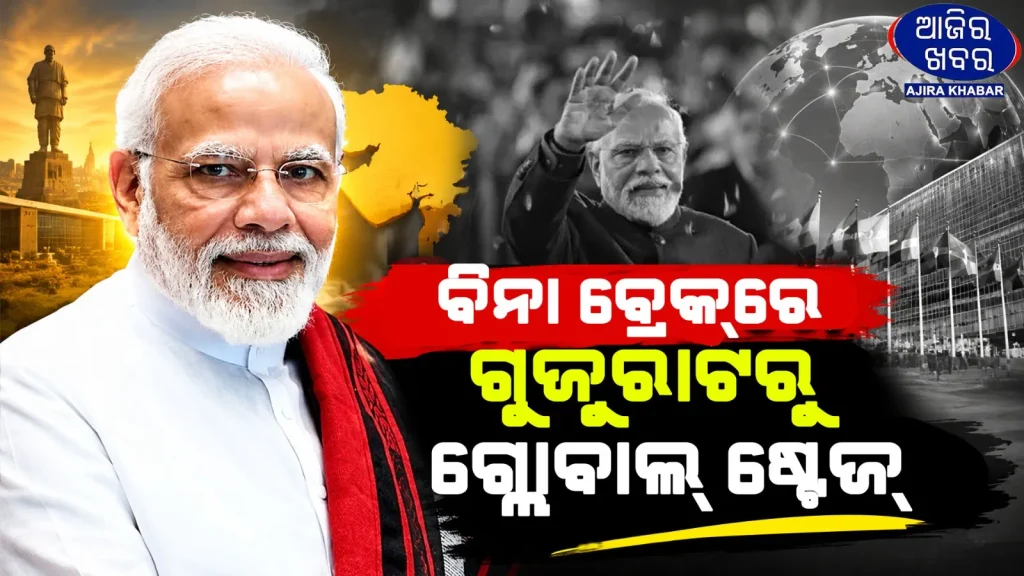
The 25-year milestone comes after another significant record earlier in 2026. On June 10, the Union Cabinet noted that Modi had become the longest-serving elected Prime Minister of India in consecutive terms, crossing Jawaharlal Nehru’s previous record for continuous service as an elected Prime Minister.
On October 7, Modi marked the completion of 25 years in public office by expressing gratitude to the people and reaffirming his commitment to serving the country.
The milestone has prompted reactions from political leaders, supporters and organisations across India. The BJP has also been observing the occasion through its ‘Seva Sankalp Abhiyan’, a nationwide campaign linked to Modi’s 25 years in public service.
Looking Ahead
From taking charge of Gujarat in 2001 to leading the Union government for more than a decade, Narendra Modi’s 25-year journey in executive office represents a notable period in contemporary Indian politics.
As he enters the next phase of his political career, his government is continuing to focus on its stated priorities, including economic growth, infrastructure development, technology, welfare delivery and the goal of building a ‘Viksit Bharat’ by 2047.
The 25-year milestone therefore marks not only a personal political anniversary for Modi but also an occasion to reflect on the major policy decisions, achievements, criticisms and political developments that have shaped India during this period.