Monsoon Arrives in Odisha, But Lack of Rain Puts Kharif Farming at Risk.
The southwest monsoon may have reached Odisha, but the much-awaited agricultural rainfall remains elusive. With the Kharif cropping season underway, thousands of farmers across the state are anxiously looking to the skies as prolonged dry conditions threaten cultivation and raise fears of drought.
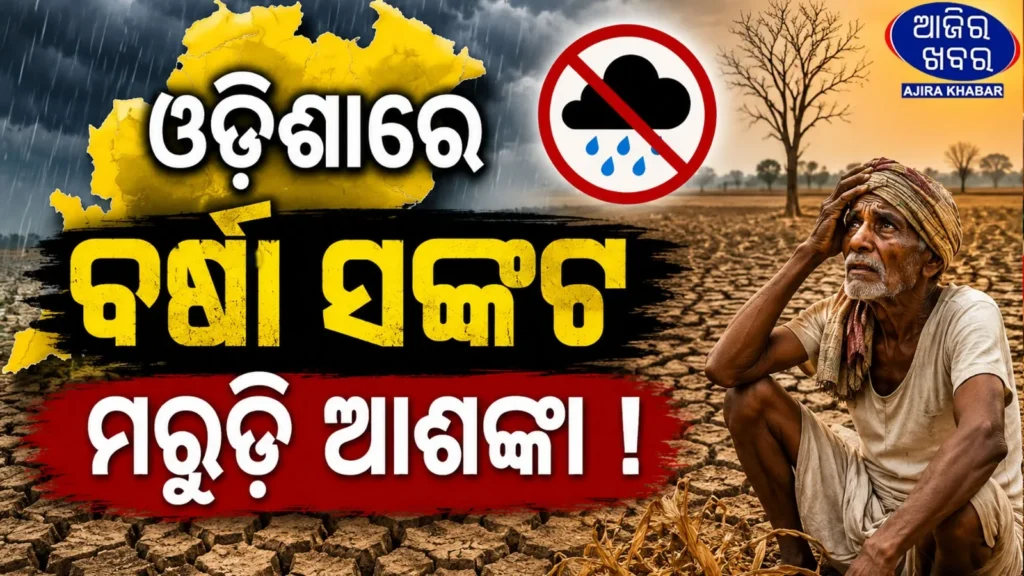
Despite the official onset of the monsoon, several districts have received far below-normal rainfall, leaving vast stretches of agricultural land dry. The delay has disrupted Kharif farming operations that traditionally begin after Akshaya Tritiya, forcing farmers to postpone sowing and nursery transplantation.
In Mayurbhanj district, where the administration has set a target of cultivating over 4.22 lakh hectares during the Kharif season, dry fields continue to dominate the landscape. Farmers fear that if widespread rainfall does not occur in the coming days, crop losses could become inevitable, severely affecting agricultural productivity.
The situation is equally worrying in Bhadrak. Instead of tractors and ploughs preparing fields for cultivation, grazing cattle can be seen across farmland that remains too dry for agricultural operations. The district has targeted cultivation over 1.37 lakh hectares, but inadequate rainfall has stalled progress.
In Kendrapara’s Aul region, seedlings that had begun to sprout are now at risk of drying up due to a severe shortage of water. While a handful of farmers are using water pumps to irrigate their fields, many lack access to irrigation facilities and remain completely dependent on rainfall for survival.
Farmers in Dhenkanal’s Bhuban area are also struggling. With limited canal irrigation, they are transporting water from nearby ponds and streams in an attempt to save their nurseries. In several places, cracked farmland has become a visible reminder of the worsening moisture deficit.
Weather experts attribute the current rainfall shortage to the combined impact of El Niño conditions and a weak monsoon trough. These weather patterns have significantly reduced rainfall activity over Odisha, and forecasts suggest that widespread, continuous rainfall is unlikely in the immediate future.
Agricultural experts have advised farmers to avoid rushing into sowing operations until sufficient rainfall is received. Instead, they recommend closely monitoring weather updates and making crop decisions based on rainfall patterns to minimize potential losses.
The delay in monsoon rainfall has now become one of the biggest concerns for Odisha’s farming community. Agriculture remains the backbone of the state’s rural economy, and any prolonged rainfall deficit could affect not only Kharif production but also food security and farmers’ incomes.
As the days pass without adequate rain, uncertainty continues to grow. For now, Odisha’s farmers remain hopeful that the monsoon will soon deliver the showers needed to revive their fields and safeguard this year’s Kharif season.