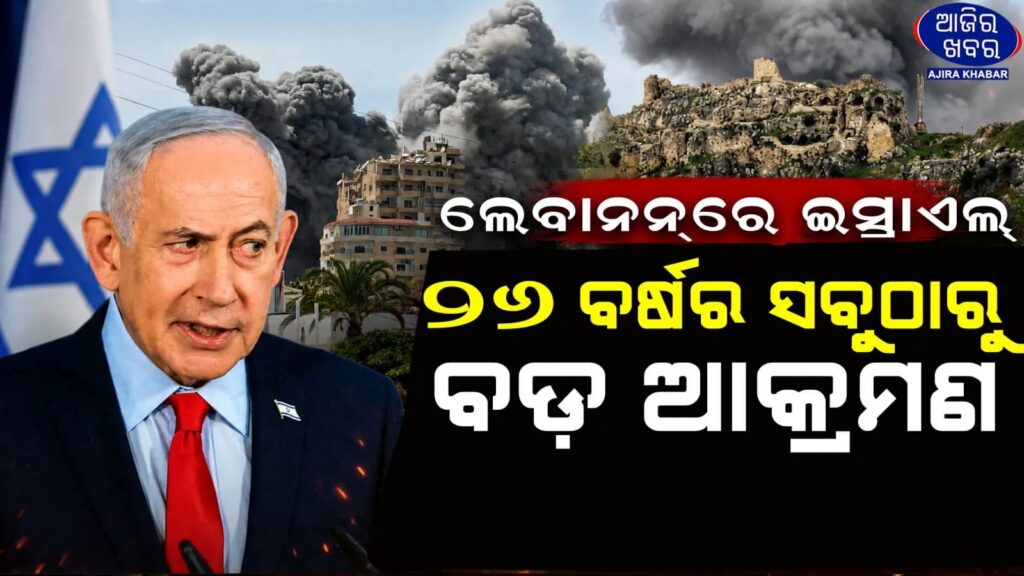
U.S. Unveils ‘Master Plan’ to End Israel–Hezbollah Conflict After Israel’s Deepest Lebanon Incursion in 26 Years
Washington/Jerusalem/Beirut: As tensions in the Middle East continue to escalate, the United States has stepped forward with a major diplomatic initiative aimed at preventing a wider regional war between Israel and Hezbollah. The proposed peace plan comes after Israel carried out its deepest military incursion into Lebanon in more than two decades, raising fears of a prolonged and devastating conflict.
According to international reports, Israeli forces have advanced deep into southern Lebanon and reportedly taken control of the historic Beaufort Castle, marking what analysts describe as Israel’s most significant military operation inside Lebanese territory in 26 years. The development has sparked concern across the international community, with many warning that the conflict could spiral into a broader regional confrontation.
In response to the rapidly deteriorating situation, U.S. Secretary of State Marco Rubio has initiated intensive diplomatic efforts involving key regional and international stakeholders. The proposed American “master plan” is designed to bring an immediate halt to hostilities and create conditions for a lasting ceasefire.
Under the reported framework, Hezbollah would be required to completely cease its rocket and drone attacks against Israel. In return, the United States would press Israel to halt its military operations and gradually withdraw its forces from Lebanese territory. The proposal seeks to establish a mutually agreed de-escalation process that could prevent further bloodshed and destruction.
The primary objective of the initiative is to stop the conflict from expanding into a full-scale war. Washington hopes that Hezbollah will pull back from sensitive border regions, allowing stability to return to the Israel-Lebanon frontier. U.S. officials believe that reducing military activity along the border is essential to restoring calm and preventing further civilian casualties on both sides.
The conflict between Israel and Hezbollah has intensified in recent months, with frequent exchanges of fire, drone strikes, and missile attacks increasing fears of a broader Middle East crisis. The latest Israeli military advance has further heightened concerns about the possibility of a prolonged confrontation.
Diplomatic observers note that the success of the American proposal will largely depend on whether both Israel and Hezbollah are willing to make concessions. While discussions are reportedly underway at the highest levels, neither side has publicly committed to the framework.
As negotiations continue, the world is closely watching developments in the region. A successful agreement could mark a significant breakthrough in one of the Middle East’s most volatile conflicts. However, failure to reach a compromise could lead to further escalation, with potentially serious consequences for regional and global security.
For now, all eyes remain on the ongoing diplomatic efforts as the United States attempts to broker peace between two long-standing adversaries and prevent another major conflict in the Middle East.