Politics

Russia Faces Fuel Crisis Amid Ukraine War, Turns to India for Gasoline Supply
National, Politics, Trending

Russia Faces Fuel Crisis Amid Ukraine War, Turns to India for Gasoline Supply.

Russia Faces Fuel Crisis Amid Ukraine War, Turns to India for Gasoline Supply. Russia Grapples with Fuel Shortage as War Continues The Russia–Ukraine war continues with no sign of a lasting ceasefire, and its impact is now being felt deep inside Russia. After years of military conflict and repeated attacks on critical infrastructure, Russia is reportedly facing a growing fuel crisis. Long queues have appeared at petrol stations in several regions, fuel prices have increased, and the government is working to stabilize domestic supplies. Recent reports suggest that Ukrainian drone and air strikes targeting Russian oil refineries and energy infrastructure have disrupted fuel production and distribution. These attacks have affected refinery operations, creating challenges in meeting the country’s daily gasoline demand. Fuel Prices Rise, Supply Under Pressure The fuel shortage has led to increased pressure on Russia’s energy sector. In several areas, motorists have been forced to wait for hours at petrol stations due to limited fuel availability. At the same time, gasoline prices have risen sharply, adding to concerns among consumers and businesses. Although Russia remains one of the world’s largest oil producers, refining and distribution disruptions have made it difficult to ensure a steady supply of fuel across the country. Officials are closely monitoring the situation and exploring options to ease the shortage. India Emerges as a Key Fuel Supplier To address the growing crisis, Russia has reportedly begun importing gasoline from India through sea routes. According to reports, India has already supplied around 60,000 metric tonnes of gasoline to Russia, while additional tanker shipments carrying between 30,000 and 40,000 tonnes each are on their way. The development marks a notable shift in energy trade. In recent years, India significantly increased its imports of discounted Russian crude oil. Indian refineries process this crude into petroleum products, including gasoline, some of which are now being exported to international markets, including Russia. Russia Expands Fuel Import Strategy Apart from India, Russia is also exploring fuel imports from other countries to stabilize domestic supplies. Belarus, one of Russia’s closest allies, has already started supplying fuel, while discussions with additional partners are reportedly underway. Reports indicate that Russia may plan to import up to 400,000 metric tonnes of gasoline per month if supply disruptions continue. The move is aimed at ensuring adequate fuel availability during the peak summer season, when domestic demand typically reaches its highest levels. Government Responds to Energy Challenges Russian President Vladimir Putin recently held meetings with senior ministers and energy officials to review the country’s fuel situation. During the discussions, officials acknowledged that Ukrainian attacks on oil refineries had contributed to fuel shortages in certain regions. The government is expected to continue monitoring refinery operations, strengthen fuel logistics, and increase imports where necessary to prevent further supply disruptions. What Lies Ahead? The ongoing conflict continues to reshape global energy markets and supply chains. If attacks on Russia’s energy infrastructure persist, maintaining stable fuel supplies could become an even greater challenge. Increased imports from countries such as India may provide temporary relief, but the long-term solution will largely depend on the restoration of refinery capacity and the future course of the Russia–Ukraine war. As the conflict enters another phase, developments in the energy sector will remain closely watched, not only for their impact on Russia but also for global fuel markets and international trade.

Russia Faces Fuel Crisis Amid Ukraine War, Turns to India for Gasoline Supply. Read Post »

Odisha to Introduce PNG Connections in Hostel Kitchens to Address LPG Supply Challenges
Odisha, Politics

Odisha to Introduce PNG Connections in Hostel Kitchens to Address LPG Supply Challenges

Odisha to Introduce PNG Connections in Hostel Kitchens to Address LPG Supply Challenges Bhubaneswar: In a significant move aimed at ensuring uninterrupted cooking facilities in student hostels, the Odisha Higher Education Department has directed eligible higher educational institutions to install Piped Natural Gas (PNG) connections in their hostel kitchens. The decision comes in response to recurring disruptions in Liquefied Petroleum Gas (LPG) supplies, which have affected the smooth functioning of hostel messes across the state. According to the department, institutions located in areas where PNG infrastructure is already available have been instructed to obtain PNG connections at the earliest. The initiative is expected to reduce dependence on LPG cylinders and provide a more reliable, continuous, and efficient fuel supply for hostel kitchens. The Higher Education Department has also emphasized the importance of adhering to all prescribed gas safety norms during the installation and operation of PNG systems. Educational institutions have been asked to ensure that proper safety measures are in place to prevent accidents and guarantee the well-being of students and staff. In addition, colleges and universities have been directed to submit progress reports on the implementation of PNG connections within the stipulated timeline. The department will closely monitor the rollout to ensure timely execution across eligible institutions. The transition to PNG is expected to offer multiple benefits, including uninterrupted fuel availability, reduced operational disruptions, and improved efficiency in hostel kitchen management. Compared to conventional LPG cylinders, PNG provides a continuous gas supply through pipelines, eliminating delays caused by cylinder shortages or transportation issues. Students living in hostels are likely to benefit significantly from this initiative, as regular meal preparation will become more reliable even during periods of LPG supply constraints. The move is also expected to enhance overall safety and streamline kitchen operations. With this decision, the Odisha Higher Education Department aims to modernize hostel infrastructure while ensuring that students receive uninterrupted dining services. The initiative reflects the government’s commitment to improving campus facilities and addressing practical challenges faced by educational institutions. Key Highlights

Odisha to Introduce PNG Connections in Hostel Kitchens to Address LPG Supply Challenges Read Post »

Big Relief for Government Employees: West Bengal Raises DA to 38%, Higher Salaries from October 2026
Politics

Big Relief for Government Employees: West Bengal Raises DA to 38%, Higher Salaries from October 2026

Big Relief for Government Employees: West Bengal Raises DA to 38%, Higher Salaries from October 2026 Kolkata: In a major announcement that is expected to bring financial relief to lakhs of families across the state, the West Bengal Government has announced a 20 percentage point increase in Dearness Allowance (DA) for government employees and pensioners in its 2026–27 budget. With this revision, DA will rise from the existing 18% to 38%, and the new rates will come into effect from October 1, 2026. The move is being viewed as one of the biggest salary-related announcements for state government employees in recent years and is expected to significantly improve monthly earnings amid rising living costs. What Does the DA Hike Mean for Employees? Dearness Allowance (DA) is a cost-of-living adjustment provided to government employees and pensioners to help offset inflation. Since DA is calculated as a percentage of the employee’s basic salary, any increase directly impacts take-home income. For example: This increase is expected to provide stronger financial support for household expenses, savings, education, healthcare, and day-to-day living costs. Pensioners Also Set to Benefit The benefit is not limited to serving employees. The government has confirmed that state pensioners will also receive the revised allowance, extending financial support to retired personnel across West Bengal. Budget Goes Beyond Salary Relief Alongside the DA announcement, the state government also unveiled a broader employment and welfare package aimed at boosting economic confidence and public welfare. 1 Lakh Government Jobs Announced The government announced plans to fill 1 lakh vacancies across different departments, creating fresh employment opportunities for youth in the state. Additionally, 33% of these positions will be reserved for women, promoting greater participation in public sector employment. Police Recruitment Drive A major recruitment push has also been announced for the police department, with 20,000 vacant positions expected to be filled in the coming phase, strengthening public service and employment generation. Focus on Women’s Education To encourage education and empower young women, the government announced a ₹50,000 scholarship support initiative for girl students studying in government schools, adding another major welfare component to the budget package. Economic and Social Impact The DA hike is expected to increase spending capacity among employees and pensioners, which may positively influence local markets and household consumption. Combined with job creation and education support, the budget reflects an attempt to balance employee welfare, employment generation, and long-term development priorities. Final Word The increase in Dearness Allowance to 38%, together with new recruitment plans and welfare measures, marks a significant announcement in West Bengal’s 2026 budget. For government employees and pensioners, October 2026 could bring a noticeable increase in monthly income and greater financial stability in the months ahead.

Big Relief for Government Employees: West Bengal Raises DA to 38%, Higher Salaries from October 2026 Read Post »

Speaker Rejects BJD’s Appeal to Disqualify Eight MLAs Over Rajya Sabha Cross-Voting
Odisha, Politics

Speaker Rejects BJD’s Appeal to Disqualify Eight MLAs Over Rajya Sabha Cross-Voting

Speaker Rejects BJD’s Appeal to Disqualify Eight MLAs Over Rajya Sabha Cross-Voting In a significant political development in Odisha, the Biju Janata Dal (BJD) has suffered a setback after Odisha Assembly Speaker Surama Padhy rejected the party’s plea seeking disqualification of eight MLAs accused of cross-voting during the Rajya Sabha elections. The decision has triggered fresh political debate in the state and could have wider implications for party discipline and legislative politics in Odisha. Background: Rajya Sabha Election and Cross-Voting Allegations The controversy traces back to the Rajya Sabha elections held in March, where allegations of cross-voting surfaced within the BJD camp. The regional party claimed that several of its legislators voted against the official party position during the election process. Following the allegations, the BJD initiated internal action and issued notices to the concerned legislators seeking explanations regarding their conduct. Later, the party moved ahead with a formal appeal seeking their disqualification. Eight MLAs Named in the Petition The BJD had sought action against the following eight MLAs: The party alleged that their actions amounted to violating party discipline during the Rajya Sabha voting process. Speaker Rejects Disqualification Request After reviewing the matter, Speaker Surama Padhy rejected the disqualification application filed by BJD. The decision effectively means that the eight MLAs will continue to retain their positions in the Odisha Legislative Assembly. While detailed reasoning behind the decision is expected to attract political and legal attention, the outcome is being viewed as a major setback for the opposition party’s attempt to take action against the legislators. Political Reactions Expected The Speaker’s decision is likely to intensify political discussions in Odisha. For the BJD, the development raises questions about internal unity and political management following the Rajya Sabha election episode. On the other hand, supporters of the decision may interpret it as a reinforcement of legislative procedure and constitutional safeguards. Political observers believe the issue may continue to influence party equations and future political strategies in the state. What This Means Going Forward Cross-voting has often been one of the most debated issues in Indian politics, particularly during indirect elections such as Rajya Sabha polls. The Odisha development once again highlights the delicate balance between party discipline and legislative procedures. With the disqualification plea now rejected, attention will shift to whether the BJD pursues any further political or legal course of action. The decision marks another important chapter in Odisha’s evolving political landscape and is expected to remain a topic of discussion in the coming weeks.

Speaker Rejects BJD’s Appeal to Disqualify Eight MLAs Over Rajya Sabha Cross-Voting Read Post »

From Rairangpur to Raisina Hill: The Inspiring Journey of President Droupadi Murmu
National, Politics

From Rairangpur to Raisina Hill: The Inspiring Journey of President Droupadi Murmu

From Rairangpur to Raisina Hill: The Inspiring Journey of President Droupadi Murmu June 20 marks the birthday of India’s Hon’ble President, Smt. Droupadi Murmu — a leader whose life journey stands as a powerful example of determination, resilience, and hope. From a small village in Odisha to the highest constitutional office in the country, her story continues to inspire millions across India. A Humble Beginning in Odisha Born on June 20, 1958, in Uparbeda village of Mayurbhanj district, Odisha, Droupadi Murmu grew up in a modest tribal family. Her early years were shaped by limited resources, social challenges, and economic struggles. Yet, she believed deeply in the transformative power of education and worked steadily toward building a meaningful future. Her journey reminds us that dreams are not defined by where one begins, but by the courage to continue moving forward. Education and Early Career Before entering public life, Droupadi Murmu worked as a teacher and remained closely connected with her community. Her commitment to education and social service helped shape her leadership style — one rooted in simplicity, discipline, and people-first values. Her involvement in public service gradually opened the path toward political leadership. From Public Service to Political Leadership Droupadi Murmu entered politics and went on to represent Rairangpur, earning the trust and support of people through dedicated public service. Over the years, she held important responsibilities and built a reputation for remaining grounded despite rising through the ranks. Her political journey reflected persistence, patience, and a deep understanding of local and national issues. Strength Through Personal Loss Behind her public achievements lies a deeply personal story of courage. At different stages of life, Droupadi Murmu faced heartbreaking personal losses, including the loss of her husband and two sons. Such moments could have ended many dreams. But she chose to continue. With resilience, inner strength, and commitment to service, she moved forward despite unimaginable challenges — becoming a symbol of perseverance for many across the country. A Historic Milestone Her leadership and dedication eventually led to her appointment as the Governor of Jharkhand, where she became known for her constitutional role and public engagement. In 2022, Droupadi Murmu created history by becoming the President of India. Her election was not only a personal achievement but also a historic moment that reflected the aspirations of millions — especially people from rural communities, tribal regions, and those who believe that opportunity and leadership can emerge from every corner of the nation. From Rairangpur to Raisina Hill The journey from Rairangpur to Raisina Hill is more than a story of political success. It is a story of hope, perseverance, and unwavering determination. President Droupadi Murmu’s life sends a powerful message: circumstances may shape beginnings, but dedication, courage, and hard work can shape destiny. On her birthday, the nation celebrates not just a constitutional leader, but a remarkable journey that continues to inspire generations. Her story remains a reminder that no dream is too distant when supported by determination and belief.

From Rairangpur to Raisina Hill: The Inspiring Journey of President Droupadi Murmu Read Post »

NEET-UG 2026 Re-Exam: Centre Tightens Rules, Raises Alarm Over Telegram Use
Education, National, Politics

NEET-UG 2026 Re-Exam: Centre Tightens Rules, Raises Alarm Over Telegram Use

NEET-UG 2026 Re-Exam: Centre Tightens Rules, Raises Alarm Over Telegram Use As preparations intensify across the country for the NEET-UG 2026 re-examination, the Central Government has raised serious concerns over the use of messaging platform Telegram, linking it to potential threats involving exam security, digital crime, and misuse of online communication channels. During proceedings before the Delhi High Court, the Centre reportedly argued that Telegram has increasingly become a platform vulnerable to misuse by criminal and anti-social elements. According to the government’s submissions, certain channels and groups operating on the platform are allegedly being used to circulate suspicious content, facilitate unauthorized communication, and share links connected to hidden online networks. Concerns Over Exam Integrity The government’s concerns come at a time when authorities are focusing on ensuring a fair and transparent environment for the NEET-UG 2026 re-exam. Following earlier controversies around examination irregularities and question paper security, officials are attempting to strengthen digital monitoring and prevent any possible information leaks. Authorities believe encrypted and large-scale messaging platforms can become difficult to monitor in situations involving coordinated attempts to spread unauthorized exam-related material. National Security and Cybercrime Concerns Apart from examination-related concerns, the Centre also highlighted broader issues linked to the alleged misuse of online communication platforms. According to submissions made before the court, concerns include the possible use of such platforms in activities such as: Officials argued that strong privacy features can create challenges for law enforcement agencies while identifying offenders and tracking unlawful activities. Temporary Restrictions and Additional Measures As part of preventive steps linked to maintaining examination integrity, reports indicate that temporary restrictions have been considered during the sensitive examination period. Measures reportedly include limiting certain platform functionalities and increasing monitoring to reduce the risk of unauthorized information sharing. The government has emphasized that these actions are aimed at protecting the examination process and strengthening national digital security mechanisms. Debate Over Privacy vs Security The developments have once again brought the debate over privacy, digital freedom, and national security into focus. While encrypted platforms are widely used for legitimate communication, policymakers continue to face questions over how to prevent misuse without affecting ordinary users. As the NEET-UG 2026 re-exam approaches, students, parents, and institutions across the country will be closely watching how authorities balance exam fairness, technology regulation, and user rights in the digital age. The coming weeks are expected to play an important role in shaping both examination safeguards and the broader conversation around digital platform accountability in India.

NEET-UG 2026 Re-Exam: Centre Tightens Rules, Raises Alarm Over Telegram Use Read Post »

Historic Moment for Mayurbhanj: President Droupadi Murmu and PM Narendra Modi Visit Odisha Together
Odisha, Politics

Historic Moment for Mayurbhanj: President Droupadi Murmu and PM Narendra Modi Visit Odisha Together

Historic Moment for Mayurbhanj: President Droupadi Murmu and PM Narendra Modi Visit Odisha Together Mayurbhanj, Odisha: A historic chapter is being written in Odisha’s Mayurbhanj district as two of the country’s highest constitutional leaders—President Droupadi Murmu and Prime Minister Narendra Modi—arrive in the state within two days of each other. The rare occasion has generated immense excitement among residents and brought national attention to the district. President Droupadi Murmu, who hails from Mayurbhanj, began her two-day visit to her native region on Friday. Upon arriving at Dandabosh Airport in Rairangpur, she visited the Rairangpur Sub-Divisional Hospital, where she inaugurated a special health camp and interacted with medical experts from AIIMS Bhubaneswar. During her visit, the President is also scheduled to inaugurate a mega piped drinking water supply project that will benefit 113 villages in Kusumi Block. The project is expected to significantly improve access to clean drinking water in the region. In addition, she will inaugurate the newly constructed “Matru Shakti Bhavan” built by the Brahma Kumaris organization at Hatbadra. The President will spend the night at her residence in Rairangpur, making the visit particularly special for local residents who consider her a symbol of pride and inspiration. The significance of the visit will further increase on Saturday with the arrival of Prime Minister Narendra Modi. The Prime Minister is expected to participate in several developmental and social welfare programs alongside the President. The presence of both leaders in Mayurbhanj marks a rare and historic event for the district. The twin visits have raised hopes for accelerated development and greater national focus on the region. Local citizens are optimistic that key infrastructure, healthcare, and welfare initiatives will receive further momentum through the attention being given to the district. To ensure the smooth conduct of the high-profile visits, extensive security arrangements have been put in place. More than 150 platoons of police personnel and over 500 officers have been deployed across Mayurbhanj. Specialized security teams are overseeing route management, helipad security, crowd control, and traffic regulation in accordance with established security protocols. As Mayurbhanj welcomes both the President and the Prime Minister, the district stands at the center of national attention. Their visit is expected to strengthen developmental initiatives, inspire local communities, and highlight the growing importance of the region in Odisha’s progress story. With history being made in Mayurbhanj, residents look forward to a new era of development, opportunity, and recognition for their district.

Historic Moment for Mayurbhanj: President Droupadi Murmu and PM Narendra Modi Visit Odisha Together Read Post »

Silence or Strategy? Chameli Ojha Row Sparks 2029 Political Speculation in Kendrapara
Odisha, Politics

Silence or Strategy? Chameli Ojha Row Sparks 2029 Political Speculation in Kendrapara

Silence or Strategy? Chameli Ojha Row Sparks 2029 Political Speculation in Kendrapara The growing political discussion around Chameli Ojha and the continued silence from both the Odisha government and the BJP leadership have become a major talking point in Kendrapara and across political circles in the state. While no official statement has clarified the party’s position, the absence of a strong public response has opened the door to speculation about whether this is political caution—or part of a larger long-term strategy. At the centre of the discussion is one key question: Is the silence temporary, or is BJP already preparing its political roadmap for 2029? Kendrapara’s Missing Representation in the Cabinet One of the issues repeatedly raised in local political discussions is that Kendrapara district currently does not have representation in the Mohan Majhi-led state cabinet. Despite the district’s electoral performance, the absence of a ministerial face has reportedly created disappointment among sections of local supporters and political observers. However, the party leadership has not publicly indicated whether changes or future plans are under consideration. This political gap has naturally created space for new names and possibilities to emerge. Why Is Chameli Ojha’s Name Entering the Discussion? Over recent months, Chameli Ojha’s name has increasingly appeared in political conversations. According to discussions circulating in political circles, some observers believe BJP may be looking to strengthen women’s leadership at the district level and gradually develop a recognizable local face with future electoral relevance. While these remain political interpretations and not officially confirmed plans, the repeated mention of her name has intensified public curiosity. Opposition Raises Questions Opposition voices have questioned what they describe as a relatively restrained response from the government and ruling party despite controversies and discussions surrounding Chameli Ojha. Their argument is that if the issue carried significant political consequences, stronger public messaging would likely have emerged. This has led to speculation over whether the leadership’s silence reflects political calculation rather than avoidance. However, no official evidence has been presented to support claims of any planned political elevation. The Women Leadership Factor Another dimension of the discussion is the growing influence of women voters in Odisha politics. Across India, political parties are increasingly investing in women-centric outreach and promoting women leaders at district and state levels. In this context, political analysts suggest that nurturing local women leadership could become an important electoral strategy ahead of future elections. Whether Kendrapara becomes part of such a broader approach remains uncertain, but the conversation itself reflects changing political priorities. Looking Ahead to 2029 The speculation around Chameli Ojha also highlights a larger reality—major political positioning often begins years before an election. Political parties regularly evaluate regional representation, leadership gaps, voter demographics, and future candidates long before official announcements are made. For Kendrapara, where cabinet representation remains absent for now, every emerging political figure naturally attracts greater attention. Silence or Simply Timing? At present, neither BJP nor the state government has issued any official statement linking Chameli Ojha to future leadership plans or ministerial ambitions. As a result, much of the current discussion remains within the realm of political interpretation and public debate. But one thing appears clear: conversations around leadership, representation, and Kendrapara’s political future are unlikely to fade anytime soon. Whether the current silence is merely strategic restraint or simply routine political timing may only become clear as Odisha moves closer to the 2029 election cycle.

Silence or Strategy? Chameli Ojha Row Sparks 2029 Political Speculation in Kendrapara Read Post »

Police and Central Forces Enter Abhishek Banerjee’s Residence; Mamata Banerjee Rushes to the Spot
Politics

Police and Central Forces Enter Abhishek Banerjee’s Residence; Mamata Banerjee Rushes to the Spot

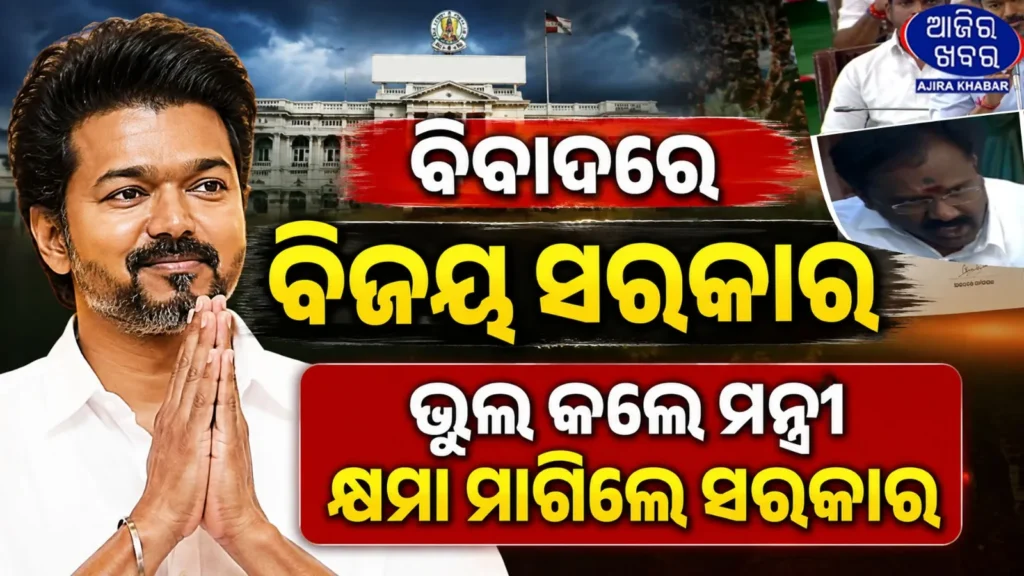
Police and Central Forces Enter Abhishek Banerjee’s Residence; Mamata Banerjee Rushes to the Spot Kolkata Witnesses High Political Drama Amid Ongoing Investigation Kolkata witnessed a dramatic political development on Saturday morning after police officials, accompanied by central security personnel, entered the residence of Trinamool Congress (TMC) MP Abhishek Banerjee in the city’s Kalighat area. The incident quickly became a major talking point across West Bengal, triggering intense political speculation and public interest. According to reports, a team comprising officials from the Shalboni Police Station, Kolkata Police, and central forces conducted a search operation at the residence. Sources indicated that the authorities were reportedly looking for Sumit Roy, a close associate and personal aide of Abhishek Banerjee. The operation gained further attention when West Bengal Chief Minister Mamata Banerjee reportedly rushed to her nephew’s residence soon after learning about the developments. Her arrival fueled political discussions and drew significant media coverage. Search Linked to Ongoing Investigation Preliminary reports suggest that the search operation is connected to an alleged signature forgery case currently under investigation. Officials reportedly carried out an extensive search, and women officers were also part of the team. However, sources claim that the individual being sought was not found during the operation. This is not the first time investigative agencies have focused on individuals linked to the Trinamool Congress leadership. In recent years, several cases involving alleged financial irregularities, recruitment controversies, and other matters have attracted the attention of both state and central investigative agencies. Political Temperature Rises The latest development comes at a time when West Bengal’s political landscape remains highly charged. The opposition has been critical of the ruling party over various issues, while the TMC has repeatedly alleged that investigative agencies are being used for political purposes. Political analysts believe that any action involving senior TMC leaders or their close associates is likely to have significant political repercussions. The search operation has once again intensified the debate over the role of investigative agencies and the ongoing political rivalry between the ruling party in West Bengal and its opponents. Reactions Awaited As of now, there has been no detailed official statement from either Abhishek Banerjee or the state government regarding the search operation. Investigating authorities are also yet to release a comprehensive account of the findings. With the investigation continuing and political tensions running high, all eyes remain on the next developments in the case. The outcome of the probe could have important implications for both the state’s political environment and the individuals involved. This is a developing story. Further updates are awaited as more information becomes available.
Police and Central Forces Enter Abhishek Banerjee’s Residence; Mamata Banerjee Rushes to the Spot Read Post »

History Made: PM Modi Surpasses Nehru to Become India’s Longest-Serving Elected Prime Minister
National, Politics, Trending

History Made: PM Modi Surpasses Nehru to Become India’s Longest-Serving Elected Prime Minister

History Made: PM Modi Surpasses Nehru to Become India’s Longest-Serving Elected Prime Minister A Historic Milestone in Indian Democracy Prime Minister Narendra Modi has etched his name into the annals of Indian political history by becoming the longest-serving elected Prime Minister of India. On June 10, 2026, Modi surpassed the record previously held by India’s first Prime Minister, Jawaharlal Nehru, marking a significant milestone in the nation’s democratic journey. The achievement reflects not only Modi’s political longevity but also the sustained electoral mandate he has received from the people of India over the past decade. Breaking a Record That Stood for Decades After India gained independence in 1947, Jawaharlal Nehru served as the country’s first Prime Minister. However, as an elected Prime Minister under India’s parliamentary system, his tenure is counted from the formation of the first Lok Sabha in 1952. Nehru served continuously as an elected Prime Minister for 4,398 days. On June 10, 2026, Narendra Modi completed 4,399 consecutive days in office as an elected Prime Minister, thereby surpassing Nehru’s long-standing record. This historic feat places Modi at the top of a distinguished list of Indian leaders who have shaped the nation’s political landscape. A Journey That Began in 2014 Narendra Modi first assumed office as Prime Minister on May 26, 2014, following a decisive electoral victory. He went on to secure consecutive mandates in the 2019 and 2024 General Elections, becoming only the second Prime Minister after Nehru to lead a government for three consecutive terms. Over the years, his administration has focused on infrastructure development, digital transformation, welfare schemes, economic reforms, and strengthening India’s global presence. The continuation of public support across three national elections has enabled Modi to achieve a level of political continuity rarely seen in modern democracies. Governance, Development, and Public Welfare Marking the completion of another year of his government, Prime Minister Modi shared a message expressing gratitude to the people of India. He highlighted the government’s commitment to development, public welfare, and national progress. According to the Prime Minister, the guiding principle of “Nation First” has driven efforts to empower youth, women, farmers, and marginalized communities. He also emphasized India’s growing stature on the global stage and its achievements in areas ranging from digital innovation to economic growth. Supporters view the milestone as recognition of a decade-long governance model focused on development and delivery, while political observers regard it as a testament to Modi’s enduring electoral appeal. A Defining Chapter in Indian Politics Political records are often more than just numbers; they symbolize public trust, leadership, and historical significance. Narendra Modi’s achievement of becoming India’s longest-serving elected Prime Minister represents a defining moment in the country’s democratic history. As India continues its journey toward becoming a major global power, this milestone will remain an important reference point in discussions about leadership, governance, and electoral politics. Whether viewed through the lens of political strategy, governance, or democratic mandate, June 10, 2026, marks a day that will be remembered as a historic moment in India’s political narrative. As Narendra Modi surpasses Jawaharlal Nehru’s elected tenure record, a new chapter has been written in the history of Indian democracy.

History Made: PM Modi Surpasses Nehru to Become India’s Longest-Serving Elected Prime Minister Read Post »

Scroll to Top