Politics

Silence or Strategy? Chameli Ojha Row Sparks 2029 Political Speculation in Kendrapara
Odisha, Politics

Silence or Strategy? Chameli Ojha Row Sparks 2029 Political Speculation in Kendrapara

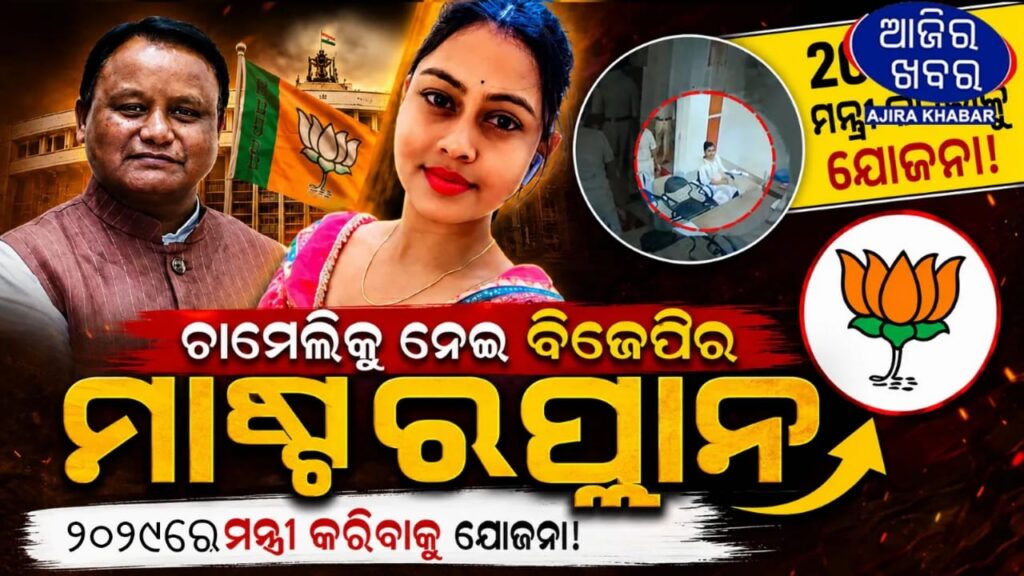
Silence or Strategy? Chameli Ojha Row Sparks 2029 Political Speculation in Kendrapara The growing political discussion around Chameli Ojha and the continued silence from both the Odisha government and the BJP leadership have become a major talking point in Kendrapara and across political circles in the state. While no official statement has clarified the party’s position, the absence of a strong public response has opened the door to speculation about whether this is political caution—or part of a larger long-term strategy. At the centre of the discussion is one key question: Is the silence temporary, or is BJP already preparing its political roadmap for 2029? Kendrapara’s Missing Representation in the Cabinet One of the issues repeatedly raised in local political discussions is that Kendrapara district currently does not have representation in the Mohan Majhi-led state cabinet. Despite the district’s electoral performance, the absence of a ministerial face has reportedly created disappointment among sections of local supporters and political observers. However, the party leadership has not publicly indicated whether changes or future plans are under consideration. This political gap has naturally created space for new names and possibilities to emerge. Why Is Chameli Ojha’s Name Entering the Discussion? Over recent months, Chameli Ojha’s name has increasingly appeared in political conversations. According to discussions circulating in political circles, some observers believe BJP may be looking to strengthen women’s leadership at the district level and gradually develop a recognizable local face with future electoral relevance. While these remain political interpretations and not officially confirmed plans, the repeated mention of her name has intensified public curiosity. Opposition Raises Questions Opposition voices have questioned what they describe as a relatively restrained response from the government and ruling party despite controversies and discussions surrounding Chameli Ojha. Their argument is that if the issue carried significant political consequences, stronger public messaging would likely have emerged. This has led to speculation over whether the leadership’s silence reflects political calculation rather than avoidance. However, no official evidence has been presented to support claims of any planned political elevation. The Women Leadership Factor Another dimension of the discussion is the growing influence of women voters in Odisha politics. Across India, political parties are increasingly investing in women-centric outreach and promoting women leaders at district and state levels. In this context, political analysts suggest that nurturing local women leadership could become an important electoral strategy ahead of future elections. Whether Kendrapara becomes part of such a broader approach remains uncertain, but the conversation itself reflects changing political priorities. Looking Ahead to 2029 The speculation around Chameli Ojha also highlights a larger reality—major political positioning often begins years before an election. Political parties regularly evaluate regional representation, leadership gaps, voter demographics, and future candidates long before official announcements are made. For Kendrapara, where cabinet representation remains absent for now, every emerging political figure naturally attracts greater attention. Silence or Simply Timing? At present, neither BJP nor the state government has issued any official statement linking Chameli Ojha to future leadership plans or ministerial ambitions. As a result, much of the current discussion remains within the realm of political interpretation and public debate. But one thing appears clear: conversations around leadership, representation, and Kendrapara’s political future are unlikely to fade anytime soon. Whether the current silence is merely strategic restraint or simply routine political timing may only become clear as Odisha moves closer to the 2029 election cycle.

Silence or Strategy? Chameli Ojha Row Sparks 2029 Political Speculation in Kendrapara Read Post »

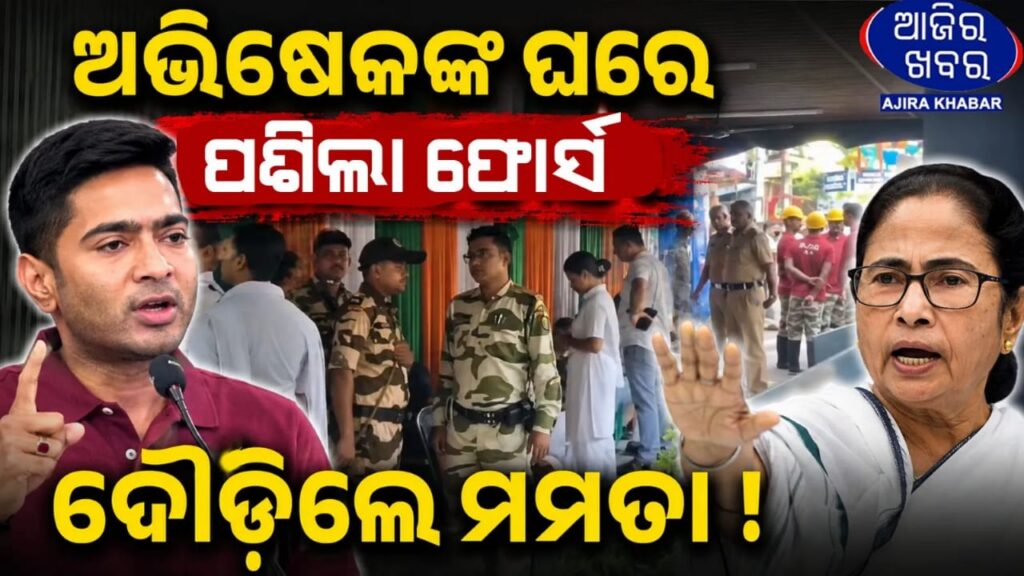
Police and Central Forces Enter Abhishek Banerjee’s Residence; Mamata Banerjee Rushes to the Spot
Politics

Police and Central Forces Enter Abhishek Banerjee’s Residence; Mamata Banerjee Rushes to the Spot

Police and Central Forces Enter Abhishek Banerjee’s Residence; Mamata Banerjee Rushes to the Spot Kolkata Witnesses High Political Drama Amid Ongoing Investigation Kolkata witnessed a dramatic political development on Saturday morning after police officials, accompanied by central security personnel, entered the residence of Trinamool Congress (TMC) MP Abhishek Banerjee in the city’s Kalighat area. The incident quickly became a major talking point across West Bengal, triggering intense political speculation and public interest. According to reports, a team comprising officials from the Shalboni Police Station, Kolkata Police, and central forces conducted a search operation at the residence. Sources indicated that the authorities were reportedly looking for Sumit Roy, a close associate and personal aide of Abhishek Banerjee. The operation gained further attention when West Bengal Chief Minister Mamata Banerjee reportedly rushed to her nephew’s residence soon after learning about the developments. Her arrival fueled political discussions and drew significant media coverage. Search Linked to Ongoing Investigation Preliminary reports suggest that the search operation is connected to an alleged signature forgery case currently under investigation. Officials reportedly carried out an extensive search, and women officers were also part of the team. However, sources claim that the individual being sought was not found during the operation. This is not the first time investigative agencies have focused on individuals linked to the Trinamool Congress leadership. In recent years, several cases involving alleged financial irregularities, recruitment controversies, and other matters have attracted the attention of both state and central investigative agencies. Political Temperature Rises The latest development comes at a time when West Bengal’s political landscape remains highly charged. The opposition has been critical of the ruling party over various issues, while the TMC has repeatedly alleged that investigative agencies are being used for political purposes. Political analysts believe that any action involving senior TMC leaders or their close associates is likely to have significant political repercussions. The search operation has once again intensified the debate over the role of investigative agencies and the ongoing political rivalry between the ruling party in West Bengal and its opponents. Reactions Awaited As of now, there has been no detailed official statement from either Abhishek Banerjee or the state government regarding the search operation. Investigating authorities are also yet to release a comprehensive account of the findings. With the investigation continuing and political tensions running high, all eyes remain on the next developments in the case. The outcome of the probe could have important implications for both the state’s political environment and the individuals involved. This is a developing story. Further updates are awaited as more information becomes available.

Police and Central Forces Enter Abhishek Banerjee’s Residence; Mamata Banerjee Rushes to the Spot Read Post »

History Made: PM Modi Surpasses Nehru to Become India’s Longest-Serving Elected Prime Minister
National, Politics, Trending

History Made: PM Modi Surpasses Nehru to Become India’s Longest-Serving Elected Prime Minister

History Made: PM Modi Surpasses Nehru to Become India’s Longest-Serving Elected Prime Minister A Historic Milestone in Indian Democracy Prime Minister Narendra Modi has etched his name into the annals of Indian political history by becoming the longest-serving elected Prime Minister of India. On June 10, 2026, Modi surpassed the record previously held by India’s first Prime Minister, Jawaharlal Nehru, marking a significant milestone in the nation’s democratic journey. The achievement reflects not only Modi’s political longevity but also the sustained electoral mandate he has received from the people of India over the past decade. Breaking a Record That Stood for Decades After India gained independence in 1947, Jawaharlal Nehru served as the country’s first Prime Minister. However, as an elected Prime Minister under India’s parliamentary system, his tenure is counted from the formation of the first Lok Sabha in 1952. Nehru served continuously as an elected Prime Minister for 4,398 days. On June 10, 2026, Narendra Modi completed 4,399 consecutive days in office as an elected Prime Minister, thereby surpassing Nehru’s long-standing record. This historic feat places Modi at the top of a distinguished list of Indian leaders who have shaped the nation’s political landscape. A Journey That Began in 2014 Narendra Modi first assumed office as Prime Minister on May 26, 2014, following a decisive electoral victory. He went on to secure consecutive mandates in the 2019 and 2024 General Elections, becoming only the second Prime Minister after Nehru to lead a government for three consecutive terms. Over the years, his administration has focused on infrastructure development, digital transformation, welfare schemes, economic reforms, and strengthening India’s global presence. The continuation of public support across three national elections has enabled Modi to achieve a level of political continuity rarely seen in modern democracies. Governance, Development, and Public Welfare Marking the completion of another year of his government, Prime Minister Modi shared a message expressing gratitude to the people of India. He highlighted the government’s commitment to development, public welfare, and national progress. According to the Prime Minister, the guiding principle of “Nation First” has driven efforts to empower youth, women, farmers, and marginalized communities. He also emphasized India’s growing stature on the global stage and its achievements in areas ranging from digital innovation to economic growth. Supporters view the milestone as recognition of a decade-long governance model focused on development and delivery, while political observers regard it as a testament to Modi’s enduring electoral appeal. A Defining Chapter in Indian Politics Political records are often more than just numbers; they symbolize public trust, leadership, and historical significance. Narendra Modi’s achievement of becoming India’s longest-serving elected Prime Minister represents a defining moment in the country’s democratic history. As India continues its journey toward becoming a major global power, this milestone will remain an important reference point in discussions about leadership, governance, and electoral politics. Whether viewed through the lens of political strategy, governance, or democratic mandate, June 10, 2026, marks a day that will be remembered as a historic moment in India’s political narrative. As Narendra Modi surpasses Jawaharlal Nehru’s elected tenure record, a new chapter has been written in the history of Indian democracy.

History Made: PM Modi Surpasses Nehru to Become India’s Longest-Serving Elected Prime Minister Read Post »

From Welfare to Global Leadership: Celebrating 12 Years of the Modi Government
Politics

From Welfare to Global Leadership: Celebrating 12 Years of the Modi Government

From Welfare to Global Leadership: Celebrating 12 Years of the Modi Government June 9 marks a significant milestone in India’s political journey. It was on this day that Prime Minister Narendra Modi took office for a third consecutive term, extending a leadership tenure that has now completed 12 years at the helm of the world’s largest democracy. Over the past decade and more, the Modi government has pursued an agenda centered on welfare, development, governance reforms, and India’s growing role on the global stage. From improving the lives of millions through social welfare schemes to enhancing India’s international standing, the last 12 years have been transformative in many ways. Welfare at the Core of Governance One of the defining features of the Modi government’s approach has been its emphasis on welfare-driven governance. Several flagship schemes have focused on improving the lives of economically weaker sections of society. The Pradhan Mantri Garib Kalyan Anna Yojana (PMGKAY) has provided free food grains to millions of beneficiaries, ensuring food security for vulnerable households. Similarly, the Pradhan Mantri Awas Yojana (PMAY) has enabled millions of families to access permanent housing, improving living conditions across urban and rural India. Financial inclusion has also been a major focus through initiatives such as Jan Dhan Yojana, which brought millions of previously unbanked citizens into the formal banking system. Empowering Women Across India Women’s empowerment has remained a central pillar of government policy. The Pradhan Mantri Ujjwala Yojana transformed the lives of rural women by providing LPG connections, reducing dependence on traditional cooking fuels and improving household health conditions. Efforts to promote women’s participation in entrepreneurship, education, and governance have also gained momentum. These initiatives have aimed to enhance economic independence and strengthen the role of women in India’s development story. Revolutionizing Healthcare and Agriculture Healthcare reforms have played a key role in expanding access to medical services. Ayushman Bharat, one of the world’s largest public health insurance programs, has provided financial protection to millions of families facing costly medical treatments. The agricultural sector has also witnessed significant policy attention. Through schemes such as PM-Kisan, direct financial support has been extended to farmers, helping improve agricultural productivity and rural incomes. Driving Economic Growth and Digital Transformation India’s economic trajectory has been marked by major reforms and technological advancements. The rapid adoption of digital payments, particularly through the Unified Payments Interface (UPI), has revolutionized financial transactions and accelerated the country’s digital economy. Government initiatives such as Digital India, Startup India, and Make in India have sought to promote innovation, entrepreneurship, and manufacturing growth. These efforts have contributed to India’s emergence as one of the world’s fastest-growing major economies. India’s Rising Global Profile Beyond domestic achievements, the Modi government has focused on strengthening India’s position in global affairs. India has expanded its diplomatic engagement, strengthened strategic partnerships, and played an increasingly active role in international forums. From hosting major global events to advocating for the interests of developing nations, India has projected itself as a confident and influential voice on the world stage. The country’s growing economic strength, technological capabilities, and diplomatic outreach have enhanced its international standing. Challenges and the Road Ahead Like every government, the Modi administration has faced challenges, including economic pressures, employment concerns, and global uncertainties. As India moves forward, sustaining growth, generating jobs, improving social outcomes, and ensuring inclusive development will remain key priorities. The coming years will test how effectively the government can build upon the foundations laid over the past 12 years while addressing emerging challenges in a rapidly changing world. Twelve years of the Modi government represent a period of significant political continuity and policy-driven governance. From welfare initiatives aimed at uplifting the poor to efforts that have elevated India’s global influence, the journey reflects an ambitious vision for the nation’s future. As India enters the next phase of its development story, the impact of these reforms and initiatives will continue to shape the country’s economic, social, and geopolitical trajectory for years to come.

From Welfare to Global Leadership: Celebrating 12 Years of the Modi Government Read Post »

Cockroach Janata Party: Baijayant Panda’s Master Plan for Odisha’s Top Job?
Odisha, Politics, Trending

Cockroach Janata Party: Baijayant Panda’s Master Plan for Odisha’s Top Job?

Cockroach Janata Party: Baijayant Panda’s Master Plan for Odisha’s Top Job? The term “Cockroach Janata Party” has suddenly become one of the most talked-about political phrases in Odisha. What started as a social media trend has now evolved into a subject of intense political debate, with many questioning whether there is a larger political strategy behind the campaign. At the center of this discussion is BJP MP Baijayant “Jay” Panda, a veteran politician who has remained a significant figure in Odisha politics for more than two decades. Once a prominent leader of the Biju Janata Dal (BJD), Panda later joined the Bharatiya Janata Party (BJP), a move that many political observers viewed as part of his long-term political ambitions. Following his victory from Kendrapara in the 2024 Lok Sabha elections, Panda’s influence within the BJP appeared to strengthen further. However, despite speculation surrounding a possible ministerial berth in Prime Minister Narendra Modi’s third term, Panda did not make it into the Union Cabinet. This development fueled fresh discussions about his future political plans and whether his focus may now be shifting more toward Odisha politics. Against this backdrop, the emergence of the “Cockroach Janata Party” narrative has drawn widespread attention. Critics allege that the issue is being amplified through social media and sections of the media landscape to shape a favorable political atmosphere. Supporters, however, argue that the discussion reflects genuine public sentiment and political dissatisfaction. The larger question remains: Can a viral social media campaign translate into real political capital? Political history suggests that online popularity alone is rarely enough to determine electoral success. Odisha’s voters have traditionally prioritized leadership, governance, development, and local issues over digital trends. While social media can influence public discourse and create narratives, converting online engagement into votes requires strong grassroots organization and public trust. For Baijayant Panda, the debate presents both opportunities and risks. If the campaign succeeds in positioning him as a prominent alternative voice in Odisha politics, it could strengthen his standing within the state’s political landscape. However, if voters perceive the narrative as an artificial or overly aggressive political exercise, it could backfire and damage his image. As Odisha’s political environment continues to evolve following the historic 2024 elections, the “Cockroach Janata Party” controversy has become more than just a viral topic. It has opened a broader conversation about leadership ambitions, media influence, and the future direction of state politics. Whether this trend ultimately becomes a stepping stone toward greater political influence or fades as another short-lived social media phenomenon remains to be seen. For now, one thing is certain: the political spotlight remains firmly fixed on Baijayant Panda and the role he may play in shaping Odisha’s future.

Cockroach Janata Party: Baijayant Panda’s Master Plan for Odisha’s Top Job? Read Post »

June 4, 2024: The Historic Mandate That Ended BJD’s 24-Year Rule and Redefined Odisha Politics
Odisha, Politics

June 4, 2024: The Historic Mandate That Ended BJD’s 24-Year Rule and Redefined Odisha Politics

June 4, 2024: The Historic Mandate That Ended BJD’s 24-Year Rule and Redefined Odisha Politics Bhubaneswar: June 4, 2024, will forever remain one of the most significant dates in Odisha’s political history. It was the day when the state witnessed a dramatic shift in its political landscape, bringing an end to the uninterrupted 24-year rule of the Biju Janata Dal (BJD) and paving the way for the Bharatiya Janata Party (BJP) to form the government on its own for the first time in the state. From the early hours of the morning, all eyes were fixed on the vote-counting process. Television channels, digital platforms, and social media were abuzz with speculation and analysis. The question dominating every discussion was simple yet historic: Who would govern Odisha next? As counting progressed, the political mood in the state began to change. For years, many believed that BJD supremo and former Chief Minister Naveen Patnaik would once again lead his party to victory. Having governed Odisha since 2000, Naveen Patnaik had become synonymous with stability and continuity in the state’s politics. However, the trends emerging from counting centers across Odisha indicated a different story. With each passing round, the BJP steadily strengthened its position, while the BJD found itself struggling to maintain its dominance. What initially appeared to be a closely fought contest gradually transformed into a decisive mandate for change. By the end of the day, the verdict was clear: Odisha had chosen a new political direction. The BJP’s victory was historic on multiple fronts. Not only did it secure enough seats to form the government independently, but it also succeeded in dismantling one of the strongest regional political strongholds in the country. The result marked the end of an era that had lasted nearly a quarter of a century and opened the door to a new chapter in Odisha’s governance. For the BJP, the mandate represented years of organizational efforts, grassroots expansion, and growing voter support. For the BJD, the defeat came as a major setback, ending a remarkable political journey that had shaped Odisha’s development and administration for more than two decades. Beyond the numbers, the 2024 verdict symbolized a significant transformation in voter sentiment. It reflected the electorate’s desire for change and demonstrated that even the most established political forces are not immune to the evolving aspirations of the people. Today, as Odisha marks one year since that landmark election result, June 4 continues to be remembered as a turning point in the state’s political narrative. The day not only altered the balance of power but also redefined the future course of Odisha politics. Whether viewed as the end of an era or the beginning of a new one, June 4, 2024, stands as a historic moment that changed the direction and destiny of Odisha’s political landscape forever.

June 4, 2024: The Historic Mandate That Ended BJD’s 24-Year Rule and Redefined Odisha Politics Read Post »

Will K. Annamalai Follow Vijay’s Path?
Politics

Will K. Annamalai Follow Vijay’s Path?

Will K. Annamalai Follow Vijay’s Path? Tamil Nadu Politics Buzzes with Speculation Over BJP Leader’s Next Move Tamil Nadu’s political landscape is once again witnessing intense speculation, this time centered around former BJP Tamil Nadu president K. Annamalai. Recent reports regarding his alleged resignation letter and growing discussions about his future political plans have sparked widespread debate across social media and political circles. The buzz surrounding Annamalai comes at a crucial time when Tamil Nadu politics is undergoing a significant transformation. With actor-turned-politician Vijay entering the political arena and positioning himself as an alternative to the state’s traditional political forces, many observers are wondering whether Annamalai could be preparing to chart a similar course. According to reports, Annamalai has submitted a detailed five-page resignation letter to the BJP leadership in New Delhi. While there has been no official confirmation regarding the formation of a new political party, discussions within political circles suggest that the former BJP leader may be exploring the possibility of launching an independent political platform in Tamil Nadu. Sources indicate that such a party could focus on a “Tamil-first” approach while maintaining a broader national outlook. The proposed political platform is expected to position itself as an alternative not only to the BJP but also to Tamil Nadu’s dominant Dravidian parties, DMK and AIADMK. Political analysts believe that Annamalai’s reported dissatisfaction with alliance politics and certain strategic decisions within the BJP may have contributed to the current situation. As Tamil Nadu gears up for the 2026 Assembly elections, internal disagreements over electoral strategies and coalition arrangements have reportedly become points of contention. The emergence of Vijay as a political force has further altered the state’s political dynamics. His entry has demonstrated that voters, especially younger generations, are increasingly open to new leadership and fresh political alternatives. This changing political environment may have encouraged leaders like Annamalai to reassess their political future. Unlike traditional Dravidian politics, which has largely revolved around language and regional identity, today’s electorate appears to be looking for governance-focused leadership capable of addressing employment, development, education, and infrastructure concerns. Annamalai’s supporters argue that he possesses the administrative experience and public appeal necessary to capitalize on this shift. Reports also suggest that Annamalai could soon launch a large-scale public outreach campaign focused on the everyday issues faced by Tamil Nadu residents. Such a movement could potentially serve as the foundation for a future political organization and help him build an independent support base across the state. However, significant challenges remain. Building a successful political party from scratch requires strong grassroots networks, organizational strength, financial resources, and sustained public support. Tamil Nadu’s political history has shown that while new parties can generate excitement, translating popularity into electoral success is far more difficult. For the BJP, any departure by a prominent leader like Annamalai would undoubtedly be a setback in a state where the party has long struggled to establish itself as a major political force. His exit could complicate the party’s efforts to expand its influence ahead of the next Assembly election. As of now, much of the discussion remains speculative. Yet one thing is certain: Tamil Nadu’s political landscape is changing rapidly. Whether K. Annamalai ultimately follows Vijay’s path by launching a new political party or chooses a different route, his next move could significantly influence the state’s political future. The coming months are likely to provide clearer answers. Until then, Tamil Nadu politics remains on high alert, watching closely as one of its most prominent political figures weighs his options.

Will K. Annamalai Follow Vijay’s Path? Read Post »

U.S. Unveils 'Master Plan' to End Israel–Hezbollah Conflict After Israel's Deepest Lebanon Incursion in 26 Years
Politics

U.S. Unveils ‘Master Plan’ to End Israel–Hezbollah Conflict After Israel’s Deepest Lebanon Incursion in 26 Years

U.S. Unveils ‘Master Plan’ to End Israel–Hezbollah Conflict After Israel’s Deepest Lebanon Incursion in 26 Years Washington/Jerusalem/Beirut: As tensions in the Middle East continue to escalate, the United States has stepped forward with a major diplomatic initiative aimed at preventing a wider regional war between Israel and Hezbollah. The proposed peace plan comes after Israel carried out its deepest military incursion into Lebanon in more than two decades, raising fears of a prolonged and devastating conflict. According to international reports, Israeli forces have advanced deep into southern Lebanon and reportedly taken control of the historic Beaufort Castle, marking what analysts describe as Israel’s most significant military operation inside Lebanese territory in 26 years. The development has sparked concern across the international community, with many warning that the conflict could spiral into a broader regional confrontation. In response to the rapidly deteriorating situation, U.S. Secretary of State Marco Rubio has initiated intensive diplomatic efforts involving key regional and international stakeholders. The proposed American “master plan” is designed to bring an immediate halt to hostilities and create conditions for a lasting ceasefire. Under the reported framework, Hezbollah would be required to completely cease its rocket and drone attacks against Israel. In return, the United States would press Israel to halt its military operations and gradually withdraw its forces from Lebanese territory. The proposal seeks to establish a mutually agreed de-escalation process that could prevent further bloodshed and destruction. The primary objective of the initiative is to stop the conflict from expanding into a full-scale war. Washington hopes that Hezbollah will pull back from sensitive border regions, allowing stability to return to the Israel-Lebanon frontier. U.S. officials believe that reducing military activity along the border is essential to restoring calm and preventing further civilian casualties on both sides. The conflict between Israel and Hezbollah has intensified in recent months, with frequent exchanges of fire, drone strikes, and missile attacks increasing fears of a broader Middle East crisis. The latest Israeli military advance has further heightened concerns about the possibility of a prolonged confrontation. Diplomatic observers note that the success of the American proposal will largely depend on whether both Israel and Hezbollah are willing to make concessions. While discussions are reportedly underway at the highest levels, neither side has publicly committed to the framework. As negotiations continue, the world is closely watching developments in the region. A successful agreement could mark a significant breakthrough in one of the Middle East’s most volatile conflicts. However, failure to reach a compromise could lead to further escalation, with potentially serious consequences for regional and global security. For now, all eyes remain on the ongoing diplomatic efforts as the United States attempts to broker peace between two long-standing adversaries and prevent another major conflict in the Middle East.

U.S. Unveils ‘Master Plan’ to End Israel–Hezbollah Conflict After Israel’s Deepest Lebanon Incursion in 26 Years Read Post »

Karnataka Congress Set for Major Power Shift: Siddaramaiah Likely to Resign, D.K. Shivakumar Poised to Take Over as CM
Politics

Karnataka Congress Set for Major Power Shift: Siddaramaiah Likely to Resign, D.K. Shivakumar Poised to Take Over as CM

Karnataka Congress Set for Major Power Shift: Siddaramaiah Likely to Resign, D.K. Shivakumar Poised to Take Over as CM Bengaluru/New Delhi: A major political reshuffle appears to be unfolding in Karnataka as intense speculation grows over a possible leadership change within the Congress government. According to party insiders and political sources, Chief Minister Siddaramaiah may soon step down from his post, paving the way for Deputy Chief Minister D.K. Shivakumar to assume the top position in the state. The reported move has triggered widespread discussion in political circles, with many comparing it to the “Bihar Model” once adopted by the BJP in Bihar alongside Chief Minister Nitish Kumar. Analysts believe the Congress high command is now preparing a similar power-sharing strategy in Karnataka to balance internal party equations ahead of upcoming electoral battles. High Command’s Master Plan Sources indicate that the Congress leadership in New Delhi, including senior leader Rahul Gandhi, has advised Siddaramaiah to move to national politics by accepting a Rajya Sabha role. In return, the party is reportedly planning a smooth transition of power to D.K. Shivakumar, who has long been considered a strong contender for the Chief Minister’s chair. The leadership change is also being seen as an attempt to strengthen the party’s organizational structure in Karnataka while keeping both factions within the Congress satisfied. Yathindra Siddaramaiah May Get Cabinet Berth To ensure Siddaramaiah’s camp remains politically secure, the Congress high command is believed to be preparing a significant role for his son, Dr. Yathindra Siddaramaiah. A former MLA and medical professional, Yathindra is reportedly being considered for a ministerial position in the new cabinet, with the Health Ministry emerging as a likely portfolio. Political observers say this formula could help the Congress maintain unity during the transition while avoiding internal rebellion or dissatisfaction among supporters of Siddaramaiah. D.K. Shivakumar Set to Take Complete Charge If the reported developments materialize, D.K. Shivakumar will become the face of the Karnataka Congress government and gain complete administrative command of the state. Known for his organizational skills and strong influence within the party, Shivakumar has been waiting for an opportunity to lead the state after the Congress victory in the 2023 Assembly elections. His elevation could also signal the party’s strategy to project a younger and more aggressive leadership style ahead of future national and state-level political contests. Political Reactions Awaited While the Congress has not issued any official confirmation regarding the leadership change, political temperatures in Karnataka continue to rise. Supporters of both Siddaramaiah and Shivakumar are closely watching the developments, as any transition in power could significantly impact the state’s political landscape. All eyes are now on Bengaluru and New Delhi as the Congress leadership prepares for what could become one of the biggest political developments in Karnataka in recent years. Whether Siddaramaiah ultimately agrees to the proposed transition plan remains to be seen, but the coming hours are expected to be crucial for the future of Karnataka politics.

Karnataka Congress Set for Major Power Shift: Siddaramaiah Likely to Resign, D.K. Shivakumar Poised to Take Over as CM Read Post »

Cabinet Reshuffle Buzz Grows in Odisha: Mohan Majhi Seeks Ministers’ Report Cards Ahead of Major Overhaul
Politics

Cabinet Reshuffle Buzz Grows in Odisha: Mohan Majhi Seeks Ministers’ Report Cards Ahead of Major Overhaul

Cabinet Reshuffle Buzz Grows in Odisha: Mohan Majhi Seeks Ministers’ Report Cards Ahead of Major Overhaul The political atmosphere in Odisha has intensified amid strong indications of a major reshuffle in the cabinet led by Chief Minister Mohan Charan Majhi. Speculation gained momentum after Revenue Minister Suresh Pujari hinted at possible changes in the state ministry, triggering discussions across political circles and within the ruling BJP camp. Sources suggest that the Odisha government may soon undertake a significant reorganization of the council of ministers ahead of completing two years in office. The development comes at a time when several ministerial berths in the cabinet remain vacant, while some ministers have reportedly faced criticism over controversial statements and underwhelming administrative performance. Ministers Asked to Submit ‘Report Cards’ In a major administrative move, Chief Minister Mohan Majhi has reportedly asked all ministers to submit detailed performance report cards of their departments. The evaluation is expected to play a crucial role in deciding who retains their position and who may face removal during the reshuffle. Political observers believe the performance review is aimed at strengthening governance and improving public perception of the government before upcoming political challenges. Regional Representation Under Spotlight One of the biggest concerns surrounding the current cabinet is the issue of regional imbalance. Several key districts of Odisha, including Sundargarh, Bargarh, Balasore, Angul, Subarnapur, Kalahandi, Kandhamal, Rayagada, Boudh, Cuttack, Kendrapara, Malkangiri, Nayagarh and Koraput reportedly do not have representation in the present ministry. This has fueled demands within the BJP for broader regional inclusion in the cabinet. Party insiders claim that MLAs from underrepresented districts have already started lobbying for ministerial positions as discussions around expansion and reshuffle intensify. BJP Camp Abuzz With Lobbying and Speculation The possibility of cabinet expansion has sparked intense political activity within the ruling party. Aspirant legislators are believed to be actively engaging with party leadership to secure positions in the new ministry. Apart from cabinet changes, political circles are also discussing the possibility of changes in the Speaker’s post, with speculation that the current Speaker could be accommodated in the ministry during the reshuffle. Changes Expected in Boards and Corporations Discussions are also underway regarding appointments to several vacant government boards and corporations in Odisha. These posts have remained unfilled for a long time, and appointments are expected soon as part of a broader administrative restructuring. According to political buzz in Bhubaneswar, the issue may have also figured during Chief Minister Mohan Majhi’s recent visit to New Delhi, where key organizational and governance matters were reportedly discussed with central BJP leadership. High Stakes for Ministers With performance reviews, regional equations and political balance all coming into play, the upcoming reshuffle could prove decisive for many ministers in the current cabinet. While some leaders may secure bigger responsibilities, others could lose their positions due to poor performance or political considerations. As Odisha watches closely, all eyes are now on Chief Minister Mohan Majhi and the BJP leadership to see which new faces find a place in the cabinet and who ultimately faces the axe in the anticipated overhaul.Cabinet Reshuffle Buzz Grows in Odisha: Mohan Majhi Seeks Ministers’ Report Cards Ahead of Major Overhaul

Cabinet Reshuffle Buzz Grows in Odisha: Mohan Majhi Seeks Ministers’ Report Cards Ahead of Major Overhaul Read Post »

Scroll to Top